
 Customer Support

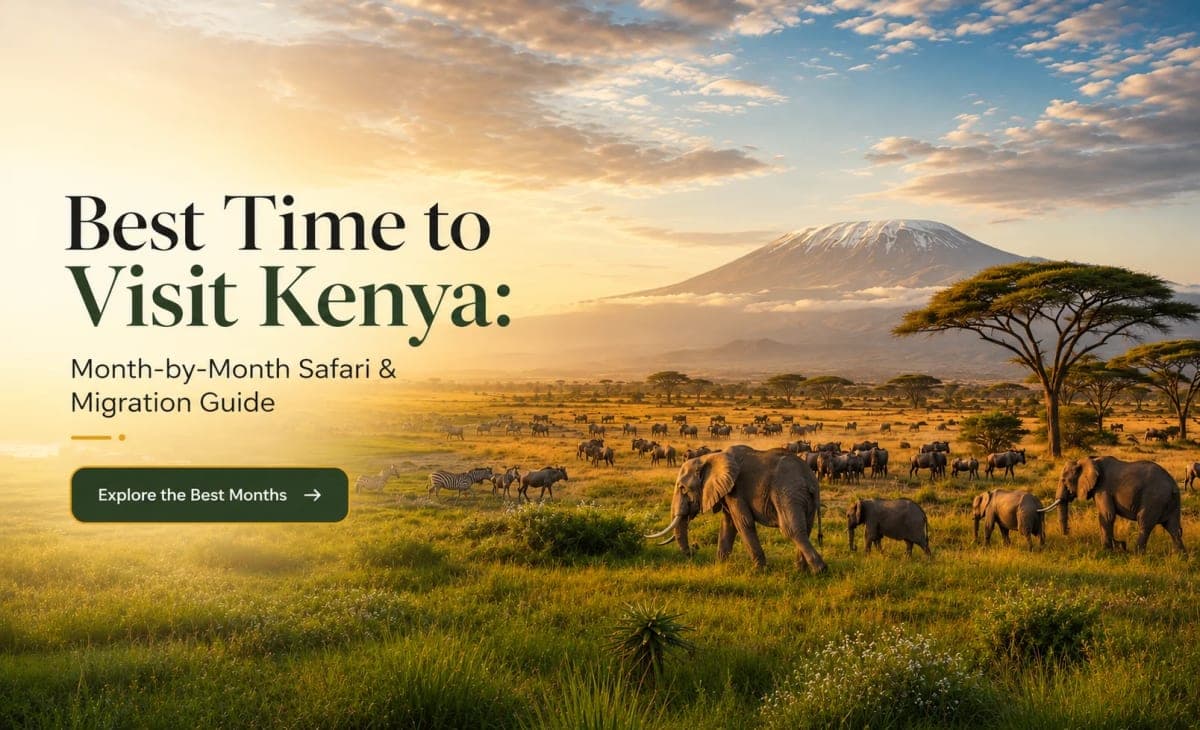
Kenya is one of those countries that is widely renowned for its spectacular safaris. Whether it is thousands of wildebeests crossing the plains of the Maasai Mara or elephants wandering around the snow-capped Mount Kilimanjaro in Amboseli, any safari will be remembered. However, one thing may define your trip in a way - what is the best time to go to Kenya?
It is all up to your travel preferences. The Great Migration, early morning lions, and the white sand of Diani Beach - different people have their own expectations from the visit to this marvelous country. Depending on the season, the migration of the wildlife, the weather, accommodation rates, and number of tourists will differ. One month may be perfect for seeing lots of animals at the watering hole, and the next one – you may spend hours in the thick vegetation looking for them.
January: One of Kenya's Best Months for Classic Safaris
In January, conditions for safari in most parts of Kenya are perfect. Short rains are over, and green landscapes are formed, which do not include a lot of rainfall like other months. The mixture of fresh vegetation, sunny weather, and comfortable temperatures gives a great advantage for game drives.
The greatest advantage of the journey to Kenya in January is the great opportunity for visibility. Grass is lower than in the rainy period; therefore, it becomes possible to watch lions sitting under acacia trees, cheetahs observing the plain, or even elephants moving around the plain area. In addition, the water source becomes less abundant due to rains, so wildlife congregates at some specific points, giving game drives more chances of success.
One of the parks with perfect weather conditions in January is Amboseli National Park. Clear mornings allow you to see Mount Kilimanjaro standing in the background with huge herds of elephants. Maasai Mara still provides good opportunities for observing predators, but the massive migration herds have already migrated back to Tanzania. There are also good opportunities in Samburu National Reserve for people who would like to watch rare species such as Grevy's zebras, Somali ostriches, gerenuk, and reticulated giraffes.
The cost of accommodation will still be cheaper than the cost of accommodation in the migration period, even though it will still be higher compared to the rainy periods.
Estimated Cost
Budget accommodation: $80-$150 per night
Moderate safari lodges: $180-$400 per night
Luxury safari camps: $500-$1,200+ per night
Cost Note: Rates for accommodation, safaris, internal flights, national parks, and other transportation vary depending on the time of the year. Always make sure you get updated prices before booking your vacation.
Perfect For
New to safari tourists
Wildlife photography
Families
Safari and beach vacations
Couples in nice weather conditions
Pro Tip
Schedule a game drive at the start of the day. Most wildlife activities take place in the coolness of the morning, and it provides great light for photography.
Kenya offers unforgettable wildlife experiences throughout the year. Explore our Kenya Safari Tours to discover the best itineraries for every season and travel style. February is said to be one of the best months to visit Kenya on a safari, according to safari guides. It falls in the short dry season, making it a month of good weather, little rain, and high visibility in the national parks. It is an ideal month to visit Kenya as you would not have to cope with crowds like those witnessed in July and August. Due to the drying of water resources, animals would have to congregate around rivers, marshes, and water holes, which increases your chances of seeing various animals such as elephants, buffaloes, giraffes, zebras, and antelopes in just one game drive. Predators would find hunting easy due to the high concentration of prey. Lions are seen sleeping under scattered trees due to the heat of the weather and become active late in the afternoon. Visiting Amboseli National Park in February would be great, as the dry weather and clear skies make it possible to see Mount Kilimanjaro up close. Tsavo East and Tsavo West National Parks would do exceedingly well for you during this month. There is a slight increase in demand for accommodations when compared with January, mainly owing to Valentine's Day and school vacations in some international markets; however, accommodation prices are still relatively low when compared with peak migration season. Estimated Cost of Travel Budget accommodations: between $90 and $160 per night Safari lodges (mid-range): between $200 and $450 per night Luxury safaris: between $550 and $1,300+ per night Note: The costs mentioned above are approximate and may differ according to travel dates, availability of lodges, location of the park, etc. Once you've chosen the ideal travel season, compare our Kenya Safari Tour Packages to find an itinerary that matches your budget and interests. March heralds the shift from the short dry season in Kenya to the onset of long rains. Contrary to what some people think, this is not necessarily the worst time to vacation in Kenya. March is typically characterized by dry weather conditions ideal for safaris up until the later part of the month when there are rains. This means that March is a shoulder season combining good wildlife viewing with less tourism and lower travel costs. One of the greatest benefits of vacationing in Kenya in March is the peace in most areas. National parks such as Maasai Mara and Amboseli are rarely crowded with safari cars compared to the migration period. Vacationers who combine their safari trips with Kenya's beaches can still expect to have nice weather conditions, but it is important to remember that there will be an increased chance of tropical downpours towards the latter half of the month. Beaches in Diani, Watamu, and Malindi are open, with less crowded facilities making for a peaceful vacation. More affordable accommodation rates than high season Green scenery Safari crowds thin out in parks Great birdwatching Good weather conditions before rainy season Budget accommodation: $70 to $140 per night Midrange safari accommodation: $170 to $350 per night Luxury safari accommodation: $450 to $1,000+ per night Prices: The above prices of accommodation, safaris, air transport, and parks are approximations and will be subject to change according to the dates of travel, availability, and tour companies. Best For Couples Nature Photographers Bird Watchers Those seeking good value for money Safari veterans Expert Tip In case you are visiting the region in March, opt for camps that have good road access to the place, as it is common for the rains to make tracks muddy at times. Kenya's wettest month is April, signifying the start of its long rains. Although regular rains may deter a few visitors, April is unique in terms of a safari experience in Kenya. All national parks in the country become lively and full of life, while seasonal rivers become full and flowers bloom in the plains. While there is some activity of the wildlife, the tall grasses during the period may make it difficult to see the animals compared to when it is dry. However, April is an ideal period for birdwatching in the parks, with both migratory and resident birds being seen around the lakes and wetlands. Lakes Nakuru, Naivasha, and Aberdare National Park are particularly appealing at this time. The best part about traveling to Kenya in April is the low prices for luxury stays in safari lodges and camps. Those willing to endure some rain can have quieter national parks with much fewer visitors. Cost Estimate: Standard lodge accommodations will run from $150-$320 per night, while luxury camps can be priced from $400-$900+ per night. Prices Subject to Change: Accommodation costs, safaris, national park fees, and air travel are subject to change depending on the season and availability. Always verify current prices. As May marks the end of the green season, the amount of rainfall will start to reduce gradually towards the end of the month. The green vegetation provides beautiful scenery, which contrasts with the dry landscape witnessed at a later stage. Despite the dense vegetation cover, seasoned guides find it easier to spot big animals such as lions, elephants, giraffes, buffaloes, and other exotic wildlife species. Travelers will encounter few tourists in the region since it marks the start of the off-season, giving them an opportunity to have undisturbed game drives. The atmosphere also provides favorable conditions for photography, as there will be no competition among other safari cars. May is a perfect time for vacationing tourists who prefer to save money. This month marks the off-season period where most luxurious campsites offer low prices compared to the peak season. Cost Estimates: Moderately-priced lodges will typically cost between $150 and $300 per night, whereas luxury lodges will cost at least $380, with some exceeding $850 per night. Cost Disclaimer: The costs are estimates only and may be affected by your specific dates, operator, and lodge availability. The month of June signals the onset of the dry season in Kenya, characterized by cool weather and clear skies, offering excellent opportunities for game viewing. During June, the end of the rains results in diminishing vegetation cover, facilitating better visibility of animals throughout the parks. Animals will also gather near rivers and permanent sources of water. There is an increased probability of experiencing memorable wildlife encounters when undertaking game drives. In particular, Amboseli National Park is magnificent in June, with elephant herds being commonly observed against the background of the majestic Mount Kilimanjaro. Similarly, the activities at Maasai Mara become more frequent in preparation for the Great Migration, which will happen a few weeks later. Even though accommodation prices increase slightly, June is still relatively inexpensive compared to July and August. Cost Estimates: Medium-priced lodges cost around $250-$500 per night, and luxurious safaris cost between $600 and $1,400 or even more per night. Costs Warning: The cost of lodging, transportation, and safaris may vary all year round. Always check the costs before booking. Among the best times to travel to Kenya is July since it marks the start of the Great Migration into the Maasai Mara from the Serengeti of Tanzania. This sees millions of wildebeests, zebras, and gazelles moving into new areas in search of fresh pastures, trailed by predators like lions, leopards, cheetahs, and crocodiles. It is a dry season with relatively comfortable temperatures that favor extensive safaris and taking photos of animals. This period sees more visitors visiting the area, especially the Maasai Mara, and therefore it is advised to book your place several months before. Apart from the great migration, parks like Amboseli, Samburu, and Tsavo offer great opportunities for wildlife. Estimated Costs: Medium-priced safari lodges cost between $350 and $650 per night, whereas expensive camps begin at $800 per night and may even rise to above $2,000 per night. Price Note: The migration season is considered one of the busiest tourist seasons in Kenya. Prices are dependent on supply and demand, so you must confirm prices before booking. The month of August is considered the best time to take part in a safari in Kenya since the Great Migration is normally taking place, and tourists have high chances of viewing incredible Mara River crossings where thousands of wildebeests cross the river full of crocodiles. Predator action is also high. Lions, hyenas, leopards, and cheetahs are following the migrating herds. In addition, the dry weather, clear sky, and open grasslands make wildlife sightings easier and better for photography. Though August is the time when people travel to the Maasai Mara from all parts of the world, there is enough space in the Mara for taking part in an incredible safari, particularly if one goes there with skilled guides. Estimate of the costs: Average lodges normally charge between $400 and $700 per day, whereas luxury camps normally cost from $900 to $2,500+ per day. Disclaimer: Prices depend on the safari company, type of accommodation, and the period of booking the tour. If you're visiting during the Great Migration, the 8 Days Kenya Tsavo & Masai Mara Safari Tour Package combines two of Kenya's most spectacular wildlife destinations. The month of September also maintains the great wildlife watching that started in July and August. Migration herds will still be around most parts of the Maasai Mara, while predator viewing is also still great. Dry conditions ensure that the grass stays short and therefore animals are easy to find in the parks. September is popular among tourists because the month almost resembles August in terms of the migration experience but is less crowded than August since it comes after the summer holidays period. The weather is still ideal for long game drives in addition to providing beautiful light for photographers in both mornings and evenings. Apart from the Maasai Mara, other great parks such as Amboseli, Lake Nakuru and Samburu offer superb safari experiences in September. Cost Estimate: Safari lodges of mid-range quality are priced at $350-$650 per night, while luxurious safari camps may cost between $850-$2,200 and above per night. Disclaimer on Price: Prices for accommodation, safaris, and transport may vary depending on seasons and should always be checked. Travelers with more time can extend their adventure with our 10 Days Kenya & Tanzania Tour Package, covering two of East Africa's most iconic safari destinations. October signifies the end stage of the migration season in Kenya. As some herds start to make their way back towards Tanzania later in the month, it is one of the best months to observe wildlife in the Maasai Mara. The predators are extremely active due to the abundant amount of prey at hand as the migration comes to an end. The weather remains dry and great, and October is yet another wonderful month for safaris, with a slight decrease in visitor numbers starting to occur from August. October is perfect for those who missed out on the summer migration but would like to see it before it moves on from Kenya. Cost Estimate: Moderately-priced lodges will be priced at around $320 to $600 per night, whereas luxury camps will cost around $800 to $2,000+ per night. Price Note: Prices depend on the travel time, lodging location, and demand. It is important to check the prices before making any reservations. Kenya experiences its short rains in November, with showers in the afternoon reviving the environment after several months of no rain. Unlike April, the showers do not disrupt safari activities, but the parks turn green, and wildlife is visible across the country. November is a favorite month for bird watchers because migratory birds start coming from Europe and Asia. Additionally, travelers enjoy the quiet parks and reduced rates during this time of year. For photographers, there is much excitement due to the dramatic weather, vivid scenery, and lack of crowds during this period. Cost Estimates: The mid-range lodges are priced at between $180 and $350 a night. On the other hand, luxury camps go for between $450 and $1,000+ per night. Price Disclaimer: Prices vary depending on availability, dates, and tour operator policy. December is among the most flexible travel periods for Kenya. Late November is a good time for safari trips with fewer tourists, and in late December, more tourists will be found in Kenya because of the holidays. Most tourists visit wildlife locations in the Maasai Mara and Amboseli together with the beaches of Diani, Watamu, or Malindi. Safari is quite productive in December, mainly during the first half of December. There are comfortable weather conditions on the coasts of Kenya with warm weather and calm waters, suitable for diving and other water sports. As many people go on holiday, most of the hotels book up, and it is recommended to book a few months ahead of the trip in case of traveling to Kenya in late December. Cost estimates: Moderate hotels can cost from $250 to $500; luxury hotels cost from $700 to $1,800+. Price disclaimer: Holiday travel greatly influences the price of the accommodations and flights. It is advisable to check prices and availability. When it comes to the best time to visit Kenya, it entirely depends on what experience you're looking to have while in the country. Should you be interested in viewing the famous migration, then the best months to visit Kenya would be between July and October. However, should you wish for more relaxed parks, beautiful scenery, and good value, then you could choose to visit during the green season. Planning your next trip to Kenya made easy through Travelpodium. We provide you with tailor-made safari packages and tours to luxurious lodges and camps, booking flights and extending your trips to the beach. Travelpodium will assist you with creating the best experience in Kenya based on your interests, budget, and needs. Contact us today and see how we can help you plan your dream trip to Kenya! Your travel season can significantly affect accommodation and safari prices. Read our Kenya Safari Cost Guide to estimate your total travel budget before booking. February: Outstanding Wildlife Viewing Before the Long Rains
March: The Green Season Begins
Why Travel to Kenya in March?
Costs in March
April: Experience Kenya's Greenest Landscapes
May: A Great Month for Budget-Friendly Safaris
June: The Start of Kenya's Peak Safari Season
July: Witness the Beginning of the Great Migration
August: Kenya's Best Month for Wildlife Enthusiasts
September: Peak Safari Conditions Continue
October: The Final Chance to Experience the Migration
November: Discover Kenya's Quiet Green Season
December: Combine Safari Adventures with Beach Holidays
Plan Your Kenya Safari with Travelpodium
Quick Answers to Common Questions
It is said that the best time to travel to Kenya is July to October due to the dry weather and the Great Migration in the Maasai Mara. January and February are also good months to visit Kenya since you have less chance of meeting people at the wildlife parks.
The Great Migration in Kenya is said to take place between July to October. The river crossing can be seen between late July to September, but the movement of the wildlife varies every year according to the rains.
Yes, indeed it is worth visiting Kenya during the rains. Rainy seasons like April, May, and November are the times when you get to see the lush environment, fewer tourists, good bird watching, and cheap accommodation.
April and May are said to be the cheapest months to visit Kenya. The prices of luxury safaris become affordable because of the discounts provided by the lodges.
It is recommended that a 7-10 day schedule be planned for those who will have their first experience on the safaris of Kenya. This number of days gives the opportunity to visit two or three national parks and rest at the coast of Kenya on the shores of the Indian Ocean if needed.
Maasai Mara National Reserve is the favorite among first-timers because of the rich fauna, sightings of the Big Five and the Great Migration. Another great choice is the Amboseli National Park with elephants watching in the background of Kilimanjaro mountain.
Yes. Kenya is known as one of the most successful places in Africa where it is possible to spot all of the members of the Big Five – lions, leopards, elephants, buffalo and rhinos.
Kenya is visited by tourists from different countries, and the major part of tourist areas is considered safe for visiting with the help of a good tour operator.















Comments