
 Customer Support

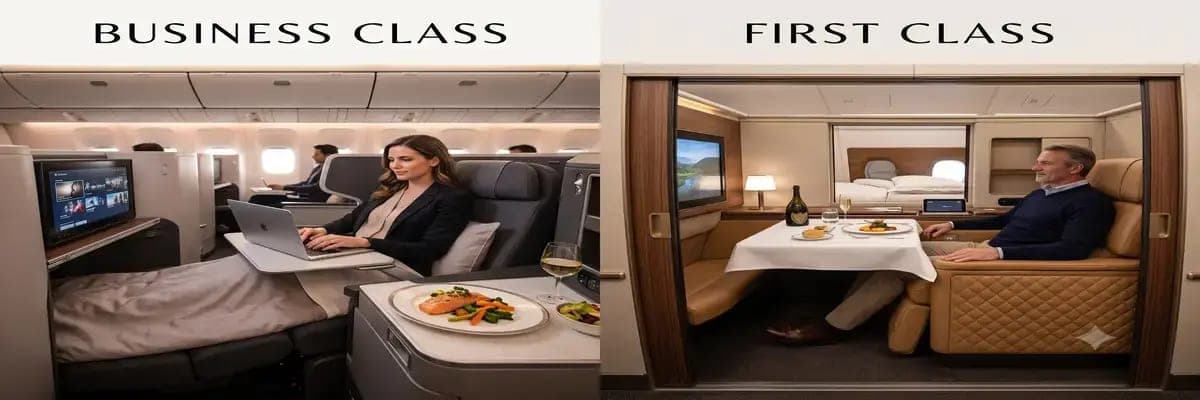
Premium air travel has changed dramatically over the last decade. Travelers once viewed first class as the ultimate flying experience and business class as a secondary option designed mainly for corporate travelers. Today, however, the difference between business class and first class is no longer as obvious as it used to be.
Modern airlines have invested heavily in premium cabins, especially on international routes. Many business class seats now offer lie-flat beds, direct aisle access, private suites, luxury dining, airport lounge access, and onboard amenities that were once available only in first class. As a result, many travelers now question whether paying significantly more for first class still makes financial sense.
The conversation around first class vs business class has become even more important because airfare prices have changed dramatically as well. On some international routes, first class tickets can cost double or even triple the price of business class seats. That raises an important question for travelers planning luxury vacations, business trips, international holidays, or long-haul journeys: is first class genuinely worth the additional cost, or has modern business class become the smarter premium option?
The answer depends heavily on:
the airline
aircraft type
route length
travel priorities
pricing differences
airport experience
personal comfort expectations
Some travelers care deeply about privacy, exclusivity, and luxury hospitality, while others simply want enough comfort to sleep properly during overnight flights and avoid arriving exhausted.
This guide explains the real difference between business and first class, including pricing, seating, airport perks, domestic and international experiences, and which cabin actually delivers the best overall value for modern travelers.
Quick Comparison Between Business Class and First Class
Feature | Business Class | First Class |
Seat Type | Lie-flat seats or suites | Private luxury suites |
Best For | Comfort and productivity | Luxury and exclusivity |
Lounge Access | Premium business lounges | Exclusive flagship lounges |
Dining | Multi-course premium meals | Personalized fine dining |
Privacy | Moderate to high | Maximum privacy |
Pricing | Expensive but practical | Extremely premium pricing |
Long-Haul Comfort | Excellent | Exceptional |
Overall Value | Strong balance of comfort and price | Best for luxury-focused travelers |
Planning premium travel? Travelers comparing business class vs first class international fares often find major seasonal price differences on Europe, Asia, and Middle East routes. Comparing premium cabin deals through Travelpodium can help identify when business class offers stronger value than first class pricing. Many travelers assume business class and first class are nearly identical, but the reality is far more nuanced. The difference between business and first class depends heavily on whether travelers are flying domestically or internationally. On international airlines, first class remains the highest level of commercial luxury available. These cabins are designed around exclusivity, privacy, and highly personalized service. Travelers may receive enclosed suites, luxury airport lounges, premium dining experiences, and onboard service that feels closer to boutique hospitality than standard airline transportation. Business class, meanwhile, focuses more on balancing comfort with practicality. Airlines design business class cabins primarily for travelers who want better sleep, improved productivity, reduced airport stress, and a more comfortable long-haul experience. This distinction matters because many travelers no longer choose premium cabins simply for status. Instead, they choose them because they want to: Sleep properly during overnight flights instead of arriving exhausted and immediately needing recovery time after landing. Reduce jet lag during long-haul international travel where physical fatigue can affect both vacations and business schedules. Work more comfortably while flying, especially on routes where productivity and personal space matter significantly. Avoid airport stress through faster boarding, lounge access, and smoother premium airport experiences. Arrive more rested and physically comfortable compared to spending ten or more hours sitting upright in economy. That is why the discussion around business vs first class has changed significantly in recent years. Travelers are no longer asking only which cabin feels more luxurious. They are asking which cabin actually provides the smartest overall value. Understanding economy vs business vs first class becomes easier when travelers focus on what each cabin is designed to prioritize. Economy class remains the most accessible and affordable cabin because airlines maximize seating capacity to transport large numbers of travelers efficiently. Most economy passengers receive: Standard seating layouts with limited legroom and reduced recline, which can become physically tiring during long-haul travel and overnight international routes. Basic meal service on international flights, although food quality, beverage options, and overall onboard service vary significantly depending on the airline. Minimal personal space and compact cabin layouts that make proper sleep difficult during flights lasting ten or more hours. Standard boarding groups and fewer airport benefits compared to premium cabin travelers, often resulting in longer waits and busier terminal experiences. For short domestic flights, economy remains perfectly practical. However, anyone who has attempted sleeping upright for twelve or fourteen hours immediately understands why premium cabins feel transformative during long-haul international travel. Also Read: Etihad vs Emirates Business Class 2026: Which Is Better? Premium economy has grown rapidly because many travelers want additional comfort without paying full business class fares. Premium economy usually includes: Wider seats and additional legroom that create a noticeably more comfortable experience than standard economy during medium and long-haul flights. Better meal service and upgraded cabin attention compared to economy passengers, although the experience still differs substantially from business class. Increased recline and improved cabin spacing that make overnight flights easier to tolerate for travelers who do not require lie-flat seating. Boarding advantages and additional baggage allowances on some airlines, helping travelers move through airports more efficiently. For travelers comparing economy vs premium economy vs business vs first class, premium economy often becomes attractive on routes where business class pricing feels too aggressive but economy feels physically exhausting. Modern business class has evolved dramatically over the last decade. Many airlines now treat business class as their primary premium product because demand remains consistently strong among both leisure and corporate travelers. Today's business class cabins commonly include: Fully lie-flat seats that allow travelers to sleep horizontally during overnight flights instead of remaining seated upright for extended periods. Direct aisle access for most passengers, eliminating the inconvenience of climbing over neighboring travelers during long-haul journeys. Airport lounge access where travelers can eat, relax, shower, or work before departure instead of sitting inside crowded terminals. Premium meal service and upgraded beverages that feel substantially more refined than economy dining experiences. Large entertainment screens, luxury bedding, improved storage space, and better workspace functionality for long international journeys. This is one reason business class has become the preferred premium option for many travelers. It solves the biggest problems associated with long-haul flying without reaching the extremely high pricing levels often associated with first class. Airlines such as Qatar Airways with Qsuite, Delta Air Lines with Delta One, and United Airlines with Polaris Business Class have dramatically raised traveler expectations for modern business cabins. First class takes premium travel beyond comfort and moves into luxury hospitality. Depending on the airline, first class may include: Enclosed private suites with doors that create a highly exclusive onboard environment and maximum personal privacy. Personalized dining experiences where travelers can order meals according to personal preference rather than following fixed airline schedules. Luxury airport services including chauffeur transfers, private check-in areas, premium lounges, and spa access at select international hubs. Larger seating areas with significantly more personal space, upgraded bedding, and enhanced privacy compared to business class. Exclusive onboard amenities such as showers, bars, premium wine programs, or dedicated cabin attendants on certain flagship international airlines. Airlines such as Emirates and Singapore Airlines continue operating some of the world's most luxurious first class products, especially on long-haul international routes. However, not all airlines still operate true international first class cabins. Many carriers have instead focused heavily on improving business class because modern business cabins already satisfy most traveler comfort expectations. The difference between business class vs first class international flights becomes much more noticeable on long-haul routes compared to shorter domestic travel. A two-hour domestic flight rarely justifies major luxury spending, but a fourteen-hour overnight journey completely changes traveler priorities. Sleep quality, privacy, physical comfort, and airport efficiency suddenly become far more important. A decade ago, business class and first class felt dramatically different. Today, however, many international business class products already provide experiences that once belonged only to first class. Travelers flying modern international business class often receive: Lie-flat beds that allow proper sleep during overnight flights instead of remaining seated upright for long periods. Private seating shells or sliding privacy doors that create a calmer onboard experience compared to crowded economy cabins. Premium dining featuring multiple courses, upgraded beverages, and restaurant-style presentation during long-haul flights. Luxury airport lounge access that significantly reduces airport stress before departure and during layovers. Better workspace functionality for travelers who need to remain productive while flying internationally. For many travelers, business class already solves the most important long-haul travel problems: inability to sleep comfortably physical exhaustion airport stress lack of privacy reduced productivity That is why many experienced travelers now consider business class the ideal balance between comfort and value. Also Read: Delta Airlines Business Class Review International first class goes beyond practicality and focuses heavily on exclusivity and luxury experiences. Travelers flying first class may receive: Extremely spacious private suites with significantly more room to move comfortably during long flights. Restaurant-style dining where meals are served according to personal preference instead of fixed airline schedules. Personalized service from cabin crews trained to provide highly attentive luxury hospitality throughout the journey. Premium airport experiences including private lounges, luxury transfers, and dedicated airport assistance at select hubs. Additional onboard luxury features such as showers, premium wine selections, and ultra-exclusive cabin layouts. On airlines such as Lufthansa, Air France, and Emirates, first class feels closer to luxury hospitality than standard airline transportation. However, for travelers focused mainly on sleep and comfort, modern business class already satisfies most long-haul needs extremely well. The biggest factor influencing traveler decisions is business class vs first class price. On long-haul international routes: Business class may already cost several times more than economy depending on demand, destination, and seasonality. First class fares can increase dramatically beyond business class pricing because airlines dedicate enormous amounts of aircraft space to relatively few passengers. Premium first class suites often require substantial operational investment including luxury catering, personalized staffing, and highly spacious cabin configurations. For example: A business class ticket from New York to Europe may already cost thousands of dollars during peak travel periods. A first class seat on the same route may increase anywhere from 40% to over 200% depending on airline, route exclusivity, and season. This is why many travelers believe the jump from economy to business class feels transformational, while the jump from business to first class becomes more subjective and luxury-focused. The physical difference between business class seats vs first class is mainly about privacy and personal space. Modern business class seats already feel highly premium on many airlines. Travelers commonly receive: Lie-flat beds that dramatically improve overnight comfort and sleep quality during international travel. Adjustable seating positions that allow travelers to work, relax, dine, or sleep comfortably throughout the flight. Storage compartments and larger entertainment systems that improve long-haul convenience significantly. Direct aisle access that creates a smoother onboard experience, especially during overnight routes. For many travelers, these features already transform the long-haul experience completely. First class seating expands significantly on those comforts. Depending on the airline, travelers may receive: Enclosed private suites with larger seating areas and substantially more personal space. Separate beds or enhanced sleeping arrangements on select international airlines. Larger dining tables and companion seating for luxury travelers flying together. Premium bedding, upgraded amenities, and enhanced privacy throughout the journey. Still, many travelers find modern business class seats already comfortable enough for overnight travel, reducing the practical need for first class. Also Read: Delta Airlines Business Class vs First Class Business class vs first class domestic flights works very differently from international premium travel. In the United States: Domestic first class is usually the highest available cabin. "Business class" may not exist on many shorter routes. Domestic first class typically includes: Wider reclining seats with additional legroom compared to economy cabins. Complimentary meals and beverages on select routes depending on flight duration. Free checked baggage and priority boarding services. Faster airport handling compared to economy passengers. However, domestic first class rarely resembles international first class suites. This is one of the biggest misunderstandings travelers make when comparing airplane business class vs first class. Domestic premium cabins focus primarily on convenience and comfort, while international first class focuses far more heavily on luxury experiences. Travelers often compare first class vs business class vs economy emotionally rather than practically. The smartest cabin choice depends heavily on: route length travel purpose sleep importance comfort expectations overall budget Economy works best when: Flights are short and travelers do not require premium comfort for only a few hours of travel. Budget remains the highest priority and travelers prefer spending more money at the destination instead of on airfare. Travelers do not mind standard seating arrangements during domestic or shorter international routes. Premium cabin pricing feels unrealistic compared to overall trip costs. Business class becomes highly valuable when: Flights exceed seven or eight hours and quality sleep becomes extremely important during travel. Travelers need workspace comfort and productivity during long international routes. Airport efficiency and lounge access significantly improve the overall journey experience. Travelers want premium comfort without paying ultra-luxury first class pricing. First class becomes worthwhile when: Travelers prioritize exclusivity, privacy, and luxury hospitality above all else. Special occasions justify the significantly higher pricing. Mileage upgrades or premium fare discounts become available. Travelers genuinely value personalized service and ultra-premium onboard experiences. For some travelers, first class is less about transportation and more about fully enjoying the journey itself. For many travelers, absolutely yes. The biggest value of business class often comes from arriving rested instead of exhausted. Long-haul economy travel can leave passengers: sleep deprived physically stiff dehydrated mentally exhausted Business class dramatically improves: sleep quality during overnight flights airport efficiency and reduced terminal stress onboard dining experiences workspace comfort and productivity overall physical recovery after landing Anyone who has flown overnight internationally in both economy and business class quickly understands why premium cabins can feel life-changing on ultra-long-haul routes. This depends entirely on traveler priorities, airline quality, and pricing differences. The jump from economy to business class is usually dramatic because travelers move from upright seating into fully flat sleeping arrangements. The jump from business to first class is often more subtle because business class already provides excellent long-haul comfort. Travelers upgrading from business to first class are usually paying for: greater privacy exclusivity personalized luxury service enhanced dining experiences larger personal space premium airport treatment rather than dramatically better transportation. For many practical travelers, business class already delivers everything needed for comfortable long-haul travel. One of the biggest shifts in aviation is the gradual disappearance of international first class. Many airlines discovered: Premium business demand remains far stronger than first class demand among modern travelers. Corporate travelers prioritize practical business class comfort rather than ultra-luxury experiences. First class cabins occupy enormous amounts of aircraft space while serving very few passengers. Modern business class already satisfies most premium traveler expectations. As a result: Many airlines eliminated first class entirely from select fleets. Business class cabins became substantially more luxurious and technologically advanced. Premium economy expanded aggressively across international aircraft configurations. Today, business class often represents the airline industry's most important premium cabin product. Business class vs first class which is better depends entirely on what travelers value most. Business class is often better for: value-conscious premium travelers corporate travel practical luxury long-haul sleep productivity First class is often better for: luxury-focused travel privacy exclusivity personalized service special occasions The best premium cabin is not automatically the most expensive one. It is the cabin that meaningfully improves the travel experience without unnecessary overspending. The debate around first class vs business class has evolved because modern business class cabins have become exceptionally sophisticated. Many travelers who once viewed first class as the ultimate flying experience now realize that business class already provides outstanding comfort, sleep quality, airport convenience, and premium service for long-haul travel. For most travelers, business class represents the strongest balance between practicality and luxury. It transforms the long-haul experience without reaching the extreme pricing levels often associated with first class. First class still delivers remarkable experiences on select airlines, especially for travelers seeking exclusivity, privacy, and luxury hospitality in the sky. However, the practical comfort difference between modern business class and first class is no longer as dramatic as it once was. Travelers comparing economy vs business vs first class should focus less on prestige and more on what genuinely improves their travel experience: better sleep reduced stress airport convenience productivity privacy overall comfort The smartest travelers are not always the ones booking the most expensive seat. They are the travelers choosing the cabin that delivers the best overall value for the journey ahead. Looking for premium airfare options? Compare business class vs first class international flight deals and explore smarter luxury travel fares through Travelpodium before booking your next long-haul journey. Airline cabin configurations, seating layouts, onboard amenities, premium services, lounge access, baggage policies, and upgrade availability may vary significantly depending on airline, aircraft type, route, operational changes, and seasonal scheduling. Any airline examples, pricing discussions, premium cabin references, or onboard service descriptions mentioned in this article are provided for informational and general travel-planning purposes only and should not be considered guaranteed airline experiences or official airline commitments. Travelers should independently verify cabin features, fare rules, upgrade eligibility, and onboard amenities directly with airlines before booking.What Is Business Class vs First Class in Modern Air Travel?
Economy vs Business vs First Class: Understanding the Real Differences
Economy Class Prioritizes Affordability Over Comfort
Premium Economy Provides More Comfort Without Full Luxury Pricing
Business Class Focuses on Long-Haul Comfort and Sleep Quality
First Class Prioritizes Exclusivity and Luxury Hospitality
Business Class vs First Class International Flights
International Business Class Has Improved Dramatically
International First Class Focuses More on Experience Than Transportation
Business Class vs First Class Price: Why the Gap Feels So Large
Business Class Seats vs First Class Seating Comfort
Business Class Seating
First Class Seating
Business Class vs First Class Domestic Flights
Economy vs Business Class vs First Class: Which Actually Makes Sense?
Economy Makes Sense When
Business Class Makes Sense When
First Class Makes Sense When
Is Flying Business Class Worth It?
Is It Worth Upgrading From Business to First Class?
Why Airlines Are Removing First Class Cabins
Business Class vs First Class: Which Is Better?
Final Thoughts
Disclaimer
Quick Answers to Common Questions
For many travelers, yes. Business class can dramatically improve long-haul travel through better sleep quality, lie-flat seating, airport lounge access, and reduced airport stress.
It depends on the airline, route length, and fare difference. The jump from economy to business class is usually more dramatic than the jump from business to first class.
Business class focuses on premium comfort and practicality, while first class emphasizes exclusivity, privacy, luxury service, and larger personal space.
For most travelers, modern business class is more than sufficient for long-haul travel because it already provides lie-flat beds, airport lounge access, and premium onboard service.
First class offers more exclusivity and luxury, while business class often provides stronger overall value for practical long-haul comfort.
Many airlines now invest more heavily in business class because demand for premium business cabins remains stronger and more profitable than maintaining large first class suites.
For luxury-focused travelers or special occasions, it can be. However, many travelers believe modern business class already provides excellent long-haul comfort.
Economy focuses on affordability, premium economy adds additional comfort, business class emphasizes lie-flat luxury and convenience, while first class delivers the most exclusive and spacious onboard experience.
No. Domestic first class in the United States is usually far less luxurious than international first class suites offered by major global airlines.
Several airlines including Singapore Airlines, Emirates, Lufthansa, and Air France still operate highly luxurious international first class cabins on select long-haul routes.




















Comments