
 Customer Support

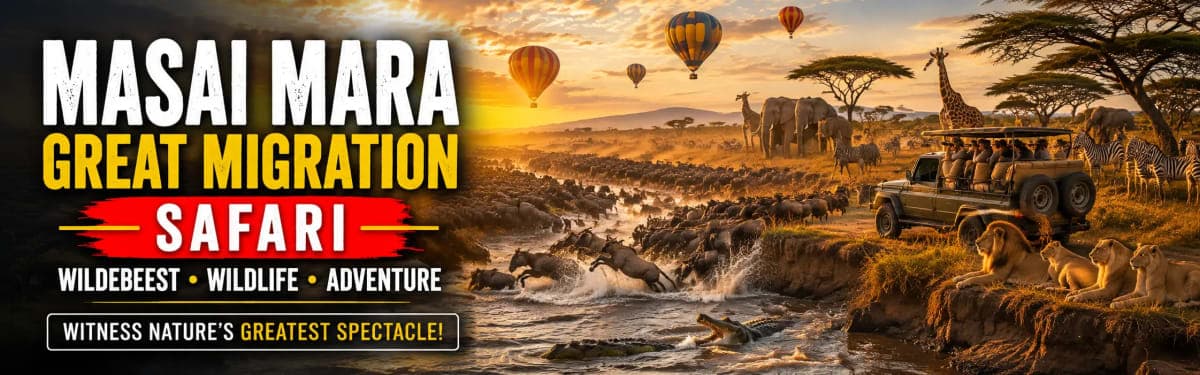
Each year, over 1.3 million wildebeests migrate through the Serengeti-Mara ecosystem alongside 200,000 zebras and thousands of gazelles searching for fresh pasture following the rainy season. The yearly event dubbed the Great Migration is known to be one of the greatest wildlife events in the world. The greatest action is witnessed in the Masai Mara National Reserve in Kenya as thousands of animals cross the crocodile-infested Mara River with predators lying in wait on the banks. A Great Migration Masai Mara Safari entails much more than just witnessing the river crossing event. It means that you get a chance to spot the Big Five, get the best experience from one of Africa's finest eco-systems, and witness one of nature's greatest stories of survival. Here is the ultimate guide on when to go, what to expect in terms of the migration, and picking the right safari packages. The Great Migration is a round-the-year movement of grazing animals within the Serengeti-Mara ecosystem in the north of Tanzania and southwest of Kenya. Contrary to migrations caused by winter cold, it is caused by rainfall. With the growth of new grass, the herds migrate to a place with food sources. There is no starting point, and there is no end; the migration process is cyclical. At the beginning of the year, the calving season comes in the southern Serengeti, where thousands of wildebeests have their calves in just several weeks. As soon as the grass dries up, the herds start moving to the west, then to the north in the direction of the Masai Mara. During July-October, numerous animals pass the Mara River to reach the territory of Kenya. Then, due to short rains coming back later in the year, the animals start migrating southward. This natural phenomenon makes the region a home for the greatest abundance of wildlife in Africa. The ideal time to travel to Masai Mara to see the Great Migration is July to October when huge herds migrate from Tanzania. Late July until September is the best time to witness the famous crossings of the Mara River, but exact timing depends on the weather. For fewer crowds and affordable prices, the time to visit is October when wildlife viewing is great while there are fewer people around. From January to March is another good time to travel to the Masai Mara to see the Big Five and have great bird watching, even though the Great Migration is at the Serengeti. April to June sees the reserve lush after long rains, lower accommodation costs, and few tourists. Quick Facts: July to September: Great Migration & river crossings October: Great wildlife, fewer crowds January to March: Big Five, bird watching April to June: Lush scenery and affordable safaris It is advisable to book a safari between six and twelve months in advance if planning to travel during the Great Migration. Before choosing your itinerary, explore our Kenya Safari Tours guide to compare the country's best national parks, wildlife experiences, and unforgettable safari adventures. Choosing a good Masai Mara safari tour package will depend on how much money you have and the kind of holiday you desire. Luxury safaris are characterized by elegant tents and camps, private game drives, expert guides, and fly-in arrangements. Most luxury safaris are set up within private conservancies. The mid-range safaris offer great value for money, with comfortable accommodations, full board meals, and shared game drives. It is recommended for honeymooners, couples, families, and those visiting the area for the first time. Lastly, there are budget safaris which emphasize cost savings without sacrificing the fun part of the adventure; that is the game drives. The budget safaris mostly involve staying in cheap accommodations like lodges and camps, and then riding in shared safari vehicles. To enjoy the migration in all its glory, opt for a good Masai Mara safari tour package that will give you a minimum of three nights in the Masai Mara. While the Great Migration is the Masai Mara's biggest attraction, the reserve offers outstanding wildlife viewing throughout the year. It is home to the Big Five: lions, leopards, elephants, buffalo, and the endangered black rhinoceros. The open grasslands also make it one of Africa's best places to spot cheetahs in the wild. Beyond the iconic predators, visitors can encounter Masai giraffes, hippos, Nile crocodiles, spotted hyenas, jackals, warthogs, elands, topis, and several species of antelope. Every game drive offers a different experience, with wildlife often gathering around rivers, watering holes, and open plains. The reserve is equally rewarding for birdwatchers, with more than 500 recorded bird species, including lilac-breasted rollers, secretary birds, crowned cranes, martial eagles, ostriches, and vultures. Whether you visit during the migration or outside the peak season, the Masai Mara delivers remarkable wildlife encounters, making it one of Africa's premier safari destinations year-round. Wondering how much your adventure will cost? Our Kenya Safari Cost Guide explains accommodation, park fees, transport, and seasonal pricing to help you budget confidently. Deciding which type of safari is better all boils down to your finances, time frame, and travel style. A fly-in safari departs from Wilson Airport in Nairobi and takes approximately one hour to get to the Masai Mara. The trip is quick, scenic, and allows for much more time spent driving through the park. This option is quite sought after by tourists who prefer a luxurious experience and who are tight on time. A road safari from Nairobi will take five to six hours, depending on how heavy the traffic is on the route. Despite the additional time needed to reach the Masai Mara, this method is considerably cheaper. In case you are short on time, it is definitely worth the extra cost. If you have plenty of time, the road safari remains a great alternative. Experience two iconic wildlife destinations with our 8 Days Kenya Tsavo & Masai Mara Safari Tour Package, combining diverse landscapes, Big Five sightings, and unforgettable game drives. A bit of planning beforehand would make your safari easy and more pleasant. You should plan for your safari at least 6 to 12 months in advance, especially if you want to experience the migration. Dress in neutral colors. Include binoculars, sun protection, a wide-brim hat, insect repellents, and a good camera in your luggage. The best time for animal viewing is early mornings and late afternoons. Obey your guides and keep safe distances from the animals. Have your passport ready and be sure about the visa requirements for Kenya. It is not only the opportunity to observe incredible wildlife that makes the Masai Mara special. You get to see one of the world's greatest tales of survival unfold right before your eyes. From observing hundreds of wildebeests assembling on the river banks to the lions patrolling the plains at dawn – each safari will be unique. Even if the crossing fails to take place while you're there, the variety of wildlife, breathtaking scenery, and skilled guides will make for an unforgettable safari adventure that you'll remember forever. Conclusion Masai Mara Great Migration Safari can be termed as one of the most memorable wildlife safaris that one can undertake. Visiting from July to October offers an amazing opportunity to see the Masai Mara River's impressive crossings, while the rest of the year offers great wildlife experiences in the Masai Mara Reserve. Whatever your choice between a luxurious fly-in trip and a cheaper road safari might be, planning and spending at least three days in the Masai Mara is highly recommended. Looking for a shorter wildlife escape? Our 5 Days Masai Mara Kenya Safari Tour Package is perfect for experiencing thrilling game drives and the famous Great Migration in less time. What Is the Great Migration?
When Is the Best Time to Visit Masai Mara?
Choosing the Best Masai Mara Safari Package
Wildlife You Can Expect Beyond the Migration
Fly-in vs Road Safari: Which Is Better?
Essential Travel Tips
Why a Great Migration Safari Is Worth It
Quick Answers to Common Questions
It is from July to October, although the period between late July and September promises the highest probability of seeing the spectacular river crossings.
Three to five days are perfect. They give ample time for multiple game drives and make sure that you spot the Big Five and migration herds.
Yes, the Masai Mara is where the Big Five - the lions, leopards, elephants, buffalo, and black rhinos - roam.
No, the migration responds to rainfall, not dates. Although the period between July and October is the best, the actual timing varies each year.
Budget safaris start from around USD 250 per day per person, while luxury ones can go above USD 2,000 per day per person.
The fly-in safari is a time-saver and quite comfortable, so it works well for short holidays. The road safari is cheaper and provides you with an opportunity to travel through the countryside of Kenya.
Lightweight neutral-colored clothes, comfortable walking shoes, binoculars, sunblock, hat, insect repellent, sunglasses, and a camera with additional batteries or memory cards.
Yes, many safari lodges in the area are family-friendly and offer big rooms, family game drives, and other family activities.
In general, mid-range safari packages offer the best combination of comfort, guided drives, and prices.
Of course, the reserve has plenty to see at any time of the year, such as the Big Five, cheetahs, giraffes, hippos, and over 500 species of birds, even without migration being in Tanzania.













Comments